everything

2026

MLCB 2026 Oral shared first author

3D-Guided Scalable Flow Matching for Generating Volumetric Tissue Spatial Transcriptomics from Serial Histology

Mohammad Vali Sanian*, Arshia Hemmat*, Amirhossein Vahidi*, Jonas Maaskola, Jimmy Tsz Hang Lee, Stanislaw Makarchuk, Yeliz Demirci, Nana-Jane Chipampe, Muzlifah Haniffa, Omer Bayraktar, Lassi Paavolainen, Mohammad Lotfollahi

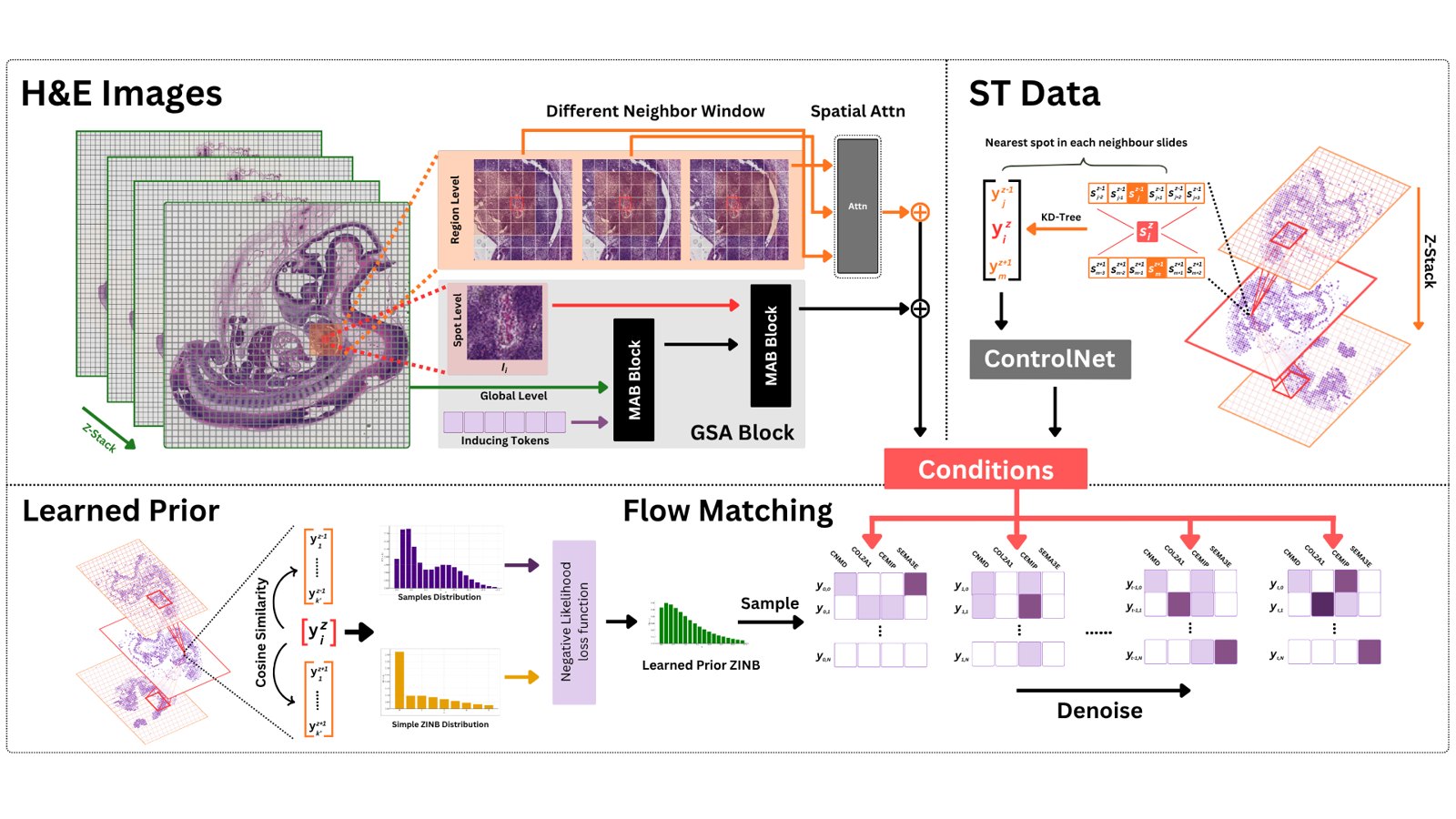
HoloTea imputes spot-level gene expression from H&E while looking at the neighbouring sections: morphologically matching spots on adjacent slides are retrieved and fused through a lightweight ControlNet, so the conditioning follows anatomical continuity rather than treating each slice as an island.

Talk and People’s Choice Poster Award, Genomics at Scale 2026.

@article{sanian2025holotea,
  title   = {3D-Guided Scalable Flow Matching for Generating Volumetric Tissue Spatial Transcriptomics from Serial Histology},
  author  = {Sanian, Mohammad Vali and Hemmat, Arshia and Vahidi, Amirhossein and Maaskola, Jonas and Lee, Jimmy Tsz Hang and Makarchuk, Stanislaw and Demirci, Yeliz and Chipampe, Nana-Jane and Haniffa, Muzlifah and Bayraktar, Omer and Paavolainen, Lassi and Lotfollahi, Mohammad},
  journal = {arXiv preprint arXiv:2511.14613},
  year    = {2025}
}

NeurIPS 2026 Main track shared first author

ORCA: Hunting Compositional Failures in Text-to-Image Diffusion

Arshia Hemmat*, Amirhossein Vahidi*, Amitis Shidani, Mohammad Vali Sanian, Hesam Asadollahzadeh, Aryan Yazdan Parast, Mohammad Lotfollahi

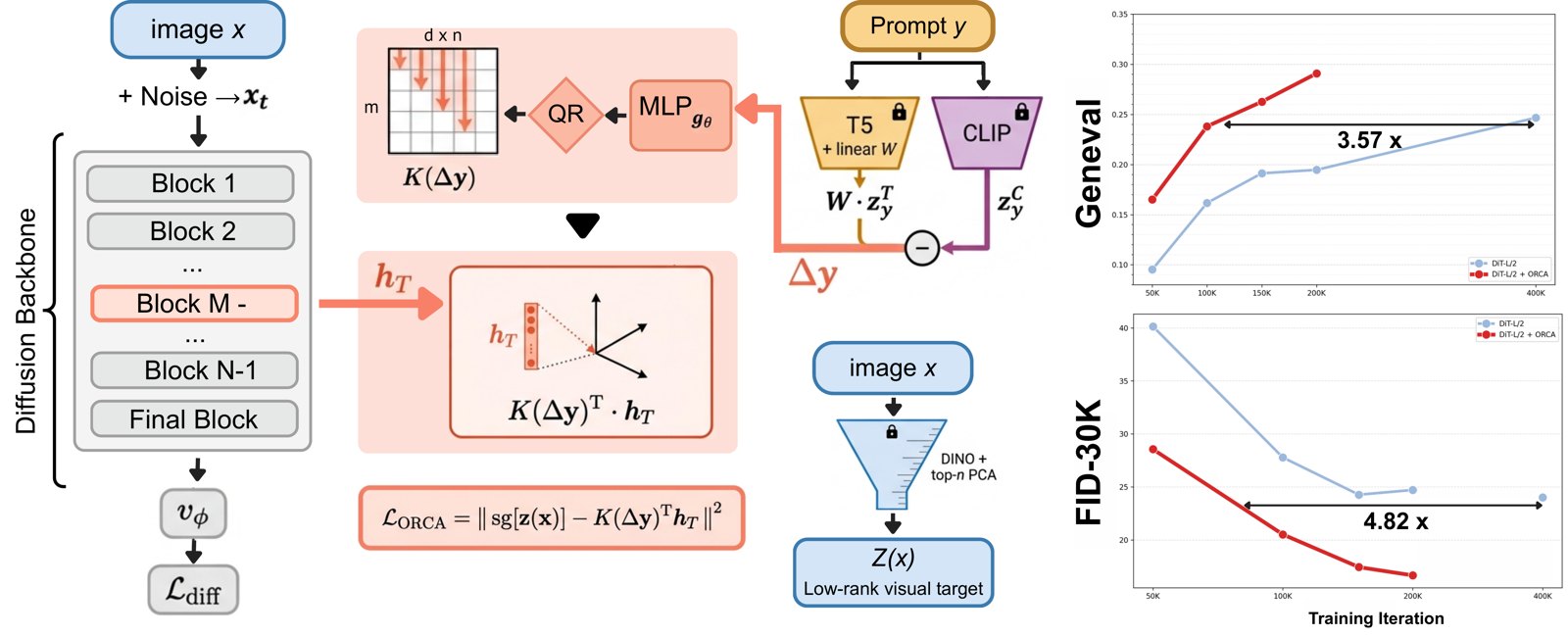
Compositional failures in text-to-image diffusion come from misaligned information, not missing information. One auxiliary loss aligns the diffusion latent with a low-rank visual target, steered by the T5 minus CLIP residual.

@inproceedings{hemmat2026orca,
  title     = {ORCA: Hunting Compositional Failures in Text-to-Image Diffusion},
  author    = {Hemmat, Arshia and Vahidi, Amirhossein and Shidani, Amitis and Sanian, Mohammad Vali and Asadollahzadeh, Hesam and Yazdan Parast, Aryan and Lotfollahi, Mohammad},
  booktitle = {Advances in Neural Information Processing Systems},
  year      = {2026}
}
/DivanBenchSilkRoadNLP 2026

SilkRoadNLP 2026 Workshop at EACL 2026 senior author

Unmasking the Factual-Conceptual Gap in Persian Language Models

Alireza Sakhaeirad, Ali Ma'manpoosh, Arshia Hemmat

DivanBench, 315 hand-curated questions separating memorised Persian cultural facts from reasoning about implicit social norms. Every model tested knows more than it can reason with.

@inproceedings{sakhaeirad-etal-2026-unmasking,
  title     = {Unmasking the Factual-Conceptual Gap in {P}ersian Language Models},
  author    = {Sakhaeirad, Alireza and Ma'manpoosh, Ali and Hemmat, Arshia},
  booktitle = {The Proceedings of the First Workshop on {NLP} and {LLM}s for the {I}ranian Language Family},
  pages     = {1--12},
  year      = {2026},
  address   = {Rabat, Morocco},
  publisher = {Association for Computational Linguistics}
}

EACL 2026 Findings

MEENA (PersianMMMU): Multimodal-Multilingual Educational Exams for N-level Assessment

Omid Ghahroodi, Arshia Hemmat, Marzia Nouri, Seyed M. H. Hosseini, Doratossadat Dastgheib, Mohammad Vali Sanian, Alireza Sahebi, Reihaneh Zohrabi, Mohammad Hossein Rohban, Ehsaneddin Asgari, Mahdieh Soleymani Baghshah

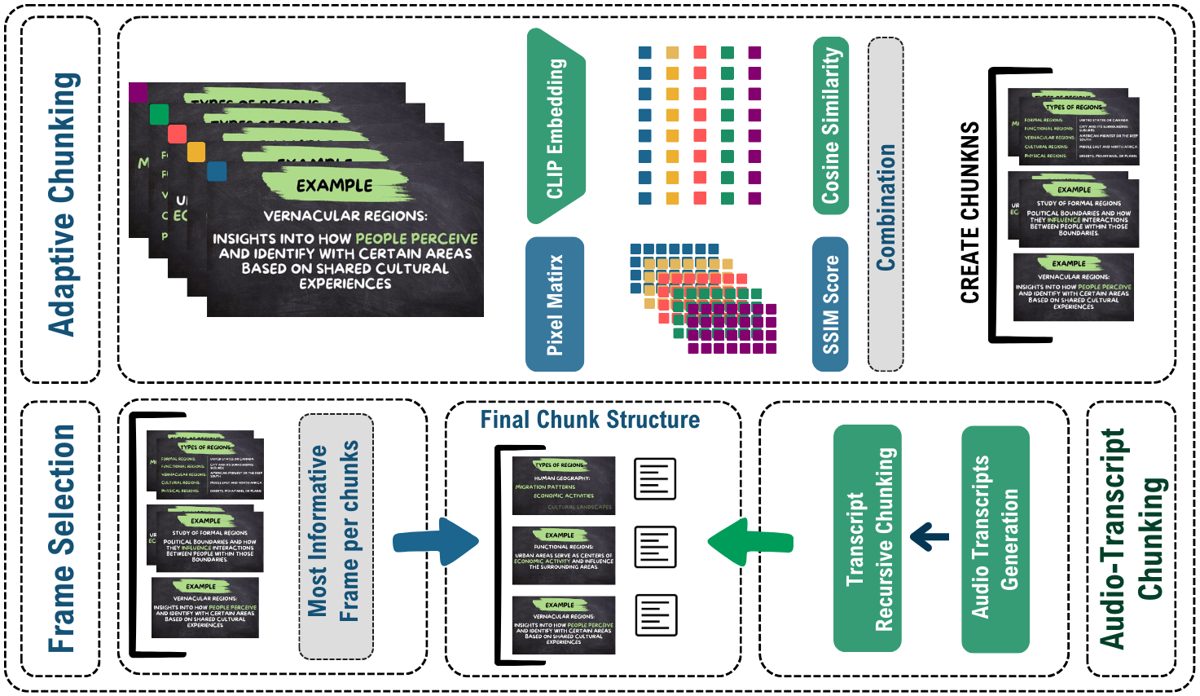
The first large-scale Persian multimodal benchmark: roughly 7.5k Persian and 3k English questions with difficulty metadata and recorded student success rates.

2025

IEEE IoT 2025 Oral first author

Advanced Mutation Testing with Zero and Few-Shot Evaluation Using GPT-4

Arshia Hemmat, Fatame Aghababaei, Mohammadreza Sharbaf, Shekoufeh Kolahdouz-Rahimi

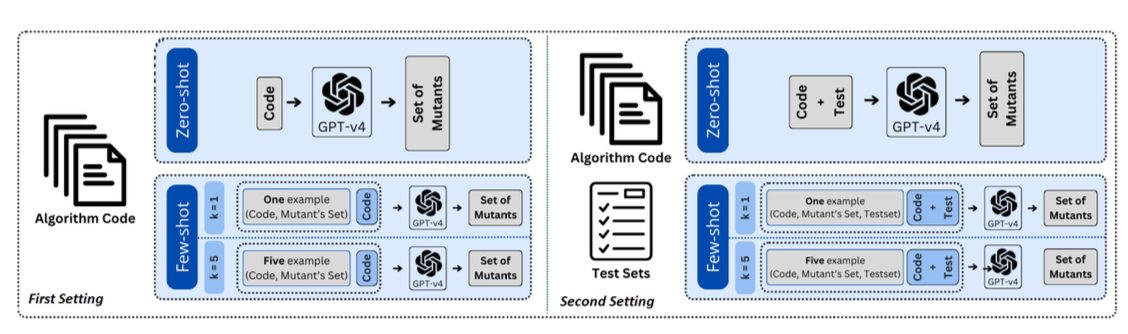
ZeMut generates mutants from structured prompts and outperforms PIT and muJava on several hard cases across twenty classic algorithms.

/PersianCLEVRNeurIPS 2025 Workshop

NeurIPS 2025 Workshop VLMs for Real-World Data, spotlight shared first author

From Scenes to Semantics: PersianCLEVR for Bilingual 3D Visual Reasoning

Kianoosh Vadaei, Melika Shirian, Arshia Hemmat, Mohammad Hassan Heydari, Ali Mamanpoosh, Afsaneh Fatemi

A bilingual Persian and English benchmark for compositional 3D visual reasoning, testing whether scene understanding survives a change of language.

/ScenePhysNeurIPS 2025 Workshop

NeurIPS 2025 Workshop Embodied World Models for Decision Making first author

ScenePhys: Controllable Physics Videos for World-Model Evaluation

Arshia Hemmat, Emad Aghahosseini, Alireza Nasri, Mohammad Hossein Shaker Ardakani, Amirmasoud Rismanchian, Ali Mamanpoosh, Afsaneh Fatemi

382 controllable simulation clips and 1,146 expert-validated questions covering conceptual, numerical and error-detection reasoning, scored under a strict rubric.

IJCNLP-AACL 2025 Main conference first author

VAGUE-Gate: A Plug-and-Play Local-Privacy Shield for Retrieval-Augmented Generation

Arshia Hemmat, Matin Moqadas, Ali Mamanpoosh, Amirmasoud Rismanchian, Afsaneh Fatemi

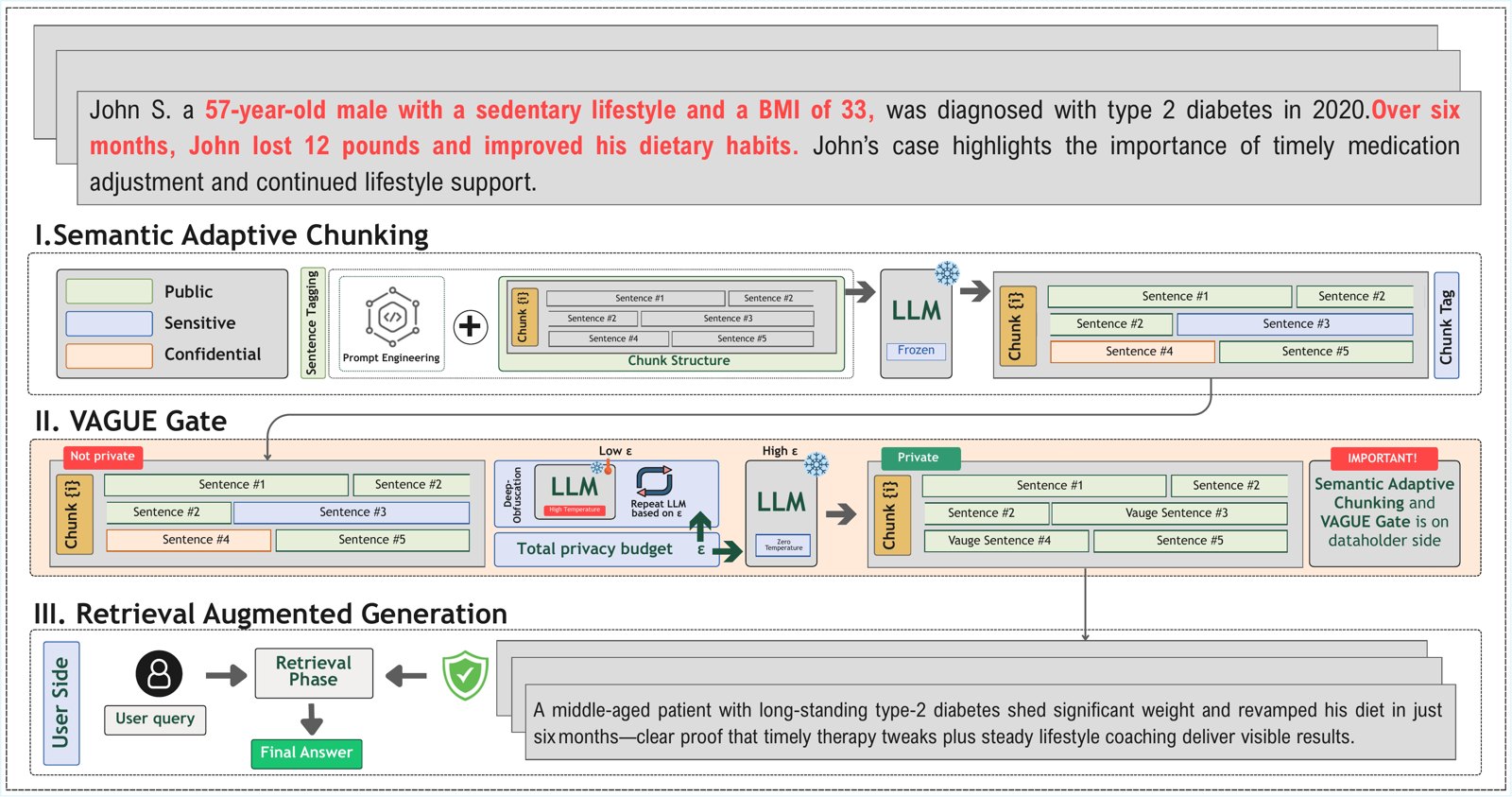
A client-side epsilon-local differential privacy gate that rewrites retrieved context before it reaches the model, preserving end-to-end guarantees under post-processing across 32 pipeline variants.

2024

NeurIPS 2024 Datasets and Benchmarks Track first author

Hidden in Plain Sight: Evaluating Abstract Shape Recognition in Vision-Language Models

Arshia Hemmat, Adam Davies, Tom A. Lamb, Jianhao Yuan, Philip Torr, Ashkan Khakzar, Francesco Pinto

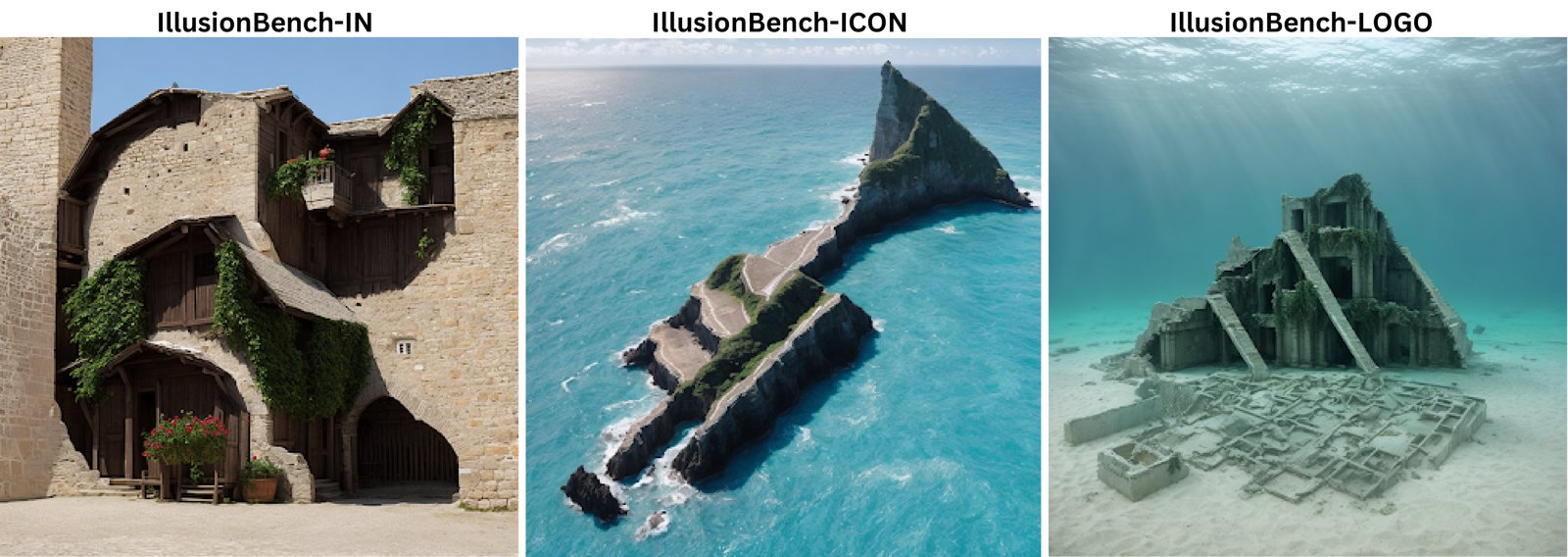
IllusionBench hides letters, faces and animals inside ordinary scenes. Human annotators read the shapes almost perfectly; leading vision-language models do not.

@inproceedings{hemmat2024hidden,
  title     = {Hidden in Plain Sight: Evaluating Abstract Shape Recognition in Vision-Language Models},
  author    = {Hemmat, Arshia and Davies, Adam and Lamb, Tom A. and Yuan, Jianhao and Torr, Philip and Khakzar, Ashkan and Pinto, Francesco},
  booktitle = {Advances in Neural Information Processing Systems 37, Datasets and Benchmarks Track},
  year      = {2024}
}

2023

/CLIPPreprint

Preprint

CLIP Exhibits Improved Compositional Generalization Through Representation Disentanglement

Reza Abbasi, Amirarshia Hemmat, Mahdi Samiei, Mohammad Hossein Rohban, Mahdieh Soleymani Baghshah

How much of CLIP's compositional generalisation can be traced to disentangled representations rather than data scale.